
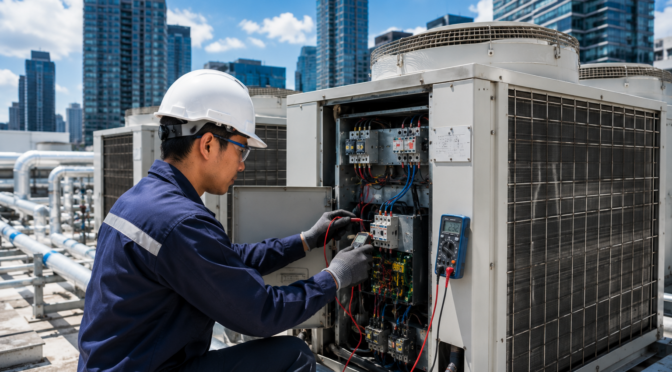
In Singapore’s tropical climate, Heating, Ventilation, and Air Conditioning (HVAC) systems play a crucial role in ensuring indoor environments that are comfortable, healthy, and conducive to productivity. Whether in office or commercial buildings, industrial infrastructure, healthcare institutions, or data centers, HVAC systems are essential for managing the internal temperature, air quality, and energy usage. In the end, selecting a trustworthy HVAC contractor Singapore companies can rely on is essential for ensuring long-lasting system performance and operational efficiency.
With rising energy costs and increasing sustainability goals, organizations are looking for advanced HVAC solutions that not only provide reliable cooling but also optimize energy consumption and reduce maintenance expenses. This guide will help you understand how to perform the installation, maintenance, and energy-saving measures for HVAC systems and what you can do to make the systems work best.
Why HVAC Systems Are Important in Singapore
Coolers and ventilators are heavily used in Singapore due to the hot, humid weather. HVAC systems enhance the comfort of the interior and also aid in improving the productivity at work, the reliability of equipment, and the well-being of the occupants.
Proper functioning HVAC systems provide the following benefits:
- Consistent temperature control
- Improved indoor air quality
- Enhanced occupant comfort
- Reduced humidity levels
- Better energy management
- Safeguarding of sensitive equipment and technology
By providing expert installation, maintenance, and optimization, businesses can reap these benefits from the expert HVAC services Singapore providers can offer.
Key HVAC Installation Services
Proper HVAC design and installation are the first steps to the performance of an HVAC system. If it is not designed properly, it can cause uneven cooling, high energy consumption, and high maintenance costs.
System Design and Load Calculation
Engineers use a range of factors to calculate the size of a building, the number of people in it, and how it will be used to decide what size HVAC system is required.
Equipment Selection
Selecting the right chillers, air handling units (AHUs), fan coil units (FCUs), ventilation systems, and controls is key to long-term efficiency.
Ductwork and Ventilation Design
Good air flow distribution will provide uniform cooling effects and help contribute to indoor air quality.
Building Automation Integration
Today, HVAC systems and building management systems (BMS) are frequently connected to allow for more centralised monitoring and control.
Testing and Commissioning
Systems are subjected to intense testing before they are set in operation to ensure they perform as expected, are safe to operate, and meet project requirements.
Enforcing efficient performance from the start of operation, professional air conditioning installation Singapore services ensure that HVAC systems are up and running efficiently.
Commercial HVAC Solutions for Modern Buildings
Commercial buildings demand complex climate control systems that can meet a variety of operating requirements.
Office Buildings
Good HVAC systems make for better office conditions, productivity, and job satisfaction.
Retail and Hospitality Facilities
Customer Experience and Operational Performance are directly affected by temperature control.
Healthcare Institutions
Air quality and indoor climate conditions in hospitals and clinics are of a very high standard, and the climate must be controlled with precision.
Industrial Facilities
Specialized ventilation and cooling systems are often necessary in manufacturing environments to accommodate particular equipment and production procedures.
Data Centers
Business continuity and reliable cooling are important for the protection of servers.
The specific needs of these spaces are met by advanced commercial HVAC (heating, ventilation, and air conditioning) solutions, which also help achieve energy efficiency objectives.
Why HVAC Maintenance Services Are Essential
They will help you maintain your HVAC systems and avoid surprises that could cause the system to fail. Systems can become less efficient, use more energy, and break down more often if they are not properly serviced.
Benefits of Preventive Maintenance
Improved Energy Efficiency
Optimized settings and clean components help to minimize energy usage.
Reduced Downtime
Ongoing inspection allows problems to be detected before they can become expensive failures.
Longer Equipment Lifespan
Well-maintained systems have a longer life cycle, reducing wear.
Better Indoor Air Quality
Filters, coils, and ductwork should be cleaned regularly for healthy indoor environments.
Lower Operating Costs
Preventive maintenance not only cuts repair costs, but it also enhances the overall system efficiency.
Professional HVAC maintenance services are a vital component to facility maintenance and asset protection.
Energy-Efficient HVAC Systems: Reducing Costs and Improving Sustainability
Many commercial buildings have one of the highest operating costs being energy usage. Efficient HVAC technologies can save considerable money and help with sustainability efforts.
High-Efficiency Equipment
Today’s chillers, compressors, and ventilation systems offer increased efficiency at reduced energy consumption.
Variable Speed Drives (VSDs)
VSD technology is based on the principle of adjusting motor speed according to the real demand, which results in saving unnecessary energy consumption.
Smart Building Controls
Automated systems automatically optimise HVAC system usage based on occupancy and environmental factors.
Energy Monitoring Systems
Real-time monitoring provides valuable insights into system performance and energy usage.
Sustainable Design Strategies
Efficient system layouts, optimal airflow, and integration of renewable energies help improve sustainability.
Companies that invest in energy-efficient HVAC systems typically find that they have a substantial decrease in utility bills and carbon emissions.
Performance Optimization Strategies
Maximizing HVAC performance requires continuous monitoring and improvement.
Airflow Balancing
Good air flow distribution will provide a uniform comfort condition throughout a facility.
Refrigerant Management
Proper refrigerant levels create efficiency and reliability of the cooling system.
Equipment Upgrades
It’s possible to save energy and boost performance significantly by updating out-of-date parts.
Predictive Maintenance
The use of advanced monitoring technologies identifies issues before they can disrupt.
Indoor Air Quality Assessments
Regular checks are used to inspect the ventilation system to ensure that it remains compliant with health and comfort standards.
These optimizations ensure that organisations get the most out of their investments and keep their buildings running smoothly.
Emerging HVAC Trends in Singapore
The HVAC industry is constantly developing, with businesses adopting innovative and eco-friendly solutions.
Smart HVAC Systems
Real-time monitoring and remote management are features of connected devices.
Green Building Initiatives
Energy-efficient HVAC Designs help achieve Green Mark certification and sustainability goals.
IoT and Predictive Analytics
The sensors and analytics platforms enhance maintenance planning and operational efficiencies.
Enhanced Indoor Air Quality Solutions
More people are becoming aware of the importance of indoor air quality and thus are turning to more sophisticated filtration and ventilation technologies.
Renewable Energy Integration
Solar for HVAC and energy storage is being considered at many facilities.
These innovations are creating the future of building climate control in Singapore.
Frequently Asked Questions (FAQs)
Q1. What does an HVAC contractor in Singapore do?
Ans: An HVAC Contractor designs, installs, maintains, repairs, and optimizes HVAC systems for commercial and industrial buildings.
Q2. Why is Maintenance of HVAC systems important?
Ans: Maintenance increases efficiency, decreases equipment breakdowns, extends equipment life, and contributes to the maintenance of indoor air quality.
Q3. What are the ways that businesses can save energy on HVAC?
Ans: There are many ways to reduce energy consumption: using energy-efficient equipment, installing smart controls, maintaining the equipment on a regular basis, and optimizing it.
Q4. Commercial HVAC solutions: What are they?
Ans: These are dedicated climate control systems for use in commercial offices, retail environments, industrial applications, healthcare facilities, and more.
Q5. When to have HVAC systems serviced?
Ans: A quarterly inspection and maintenance of most commercial systems should be performed, but may differ based on usage and operating conditions.
Conclusion
The efficient functioning of the HVAC system is vital to ensure comfort, efficiency, and energy performance in Singapore’s challenging climate. By collaborating with an experienced HVAC contractor Singapore businesses can rely on, they can ensure their systems are designed, installed, and maintained to the highest standards. Whether it’s professional air conditioning installation Singapore projects, proactive air conditioning maintenance Singapore services, advanced commercial HVAC solutions, or energy-efficient HVAC systems, expert HVAC support plays a pivotal role in helping organizations lower their costs, increase reliability, and attain long-term sustainability targets. Purchasing high-quality HVAC systems today will provide a more comfortable, efficient, and ready-to-future building environment for many years.